
 1-888-391-1339
Types of Eminent Domain Damages in Georgia
If you’re facing eminent domain, nobody would blame you for being upset.
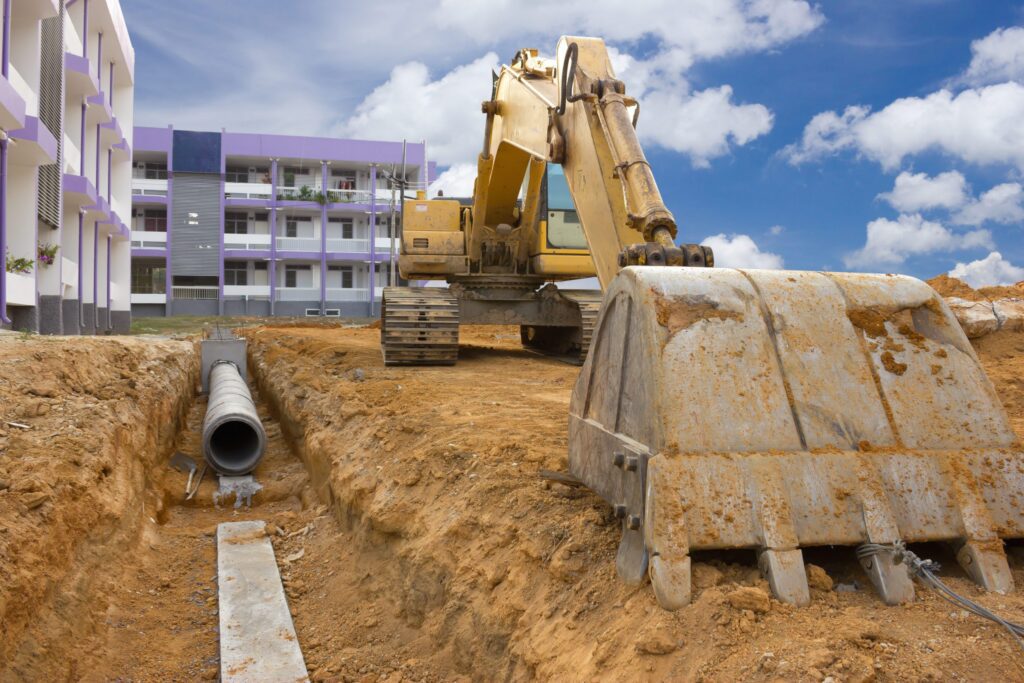 ” alt=”Excavator demolishing a building” />
By law, the government and some private entities (like utility companies) can take your property or property rights. For many owners, eminent domain ruins their long-term plans and dreams for those properties. It’s often far more than just a piece of land, and you should pursue maximum compensation if it’s being taken from you.
When the government comes for your property, it will make an initial offer. You want fair and full compensation for:
- Property or property rights actually taken
- Damage caused to the remaining property
Not only might you lose property, but what remains may be forever scarred, limited, burdened, and reduced in value – sometimes in hidden ways that affect your property’s usability and worth.
Depending on the circumstances, you may also be entitled to compensation for relocation expenses and certain qualifying business losses.
What types of damages are available in a Georgia eminent domain case?
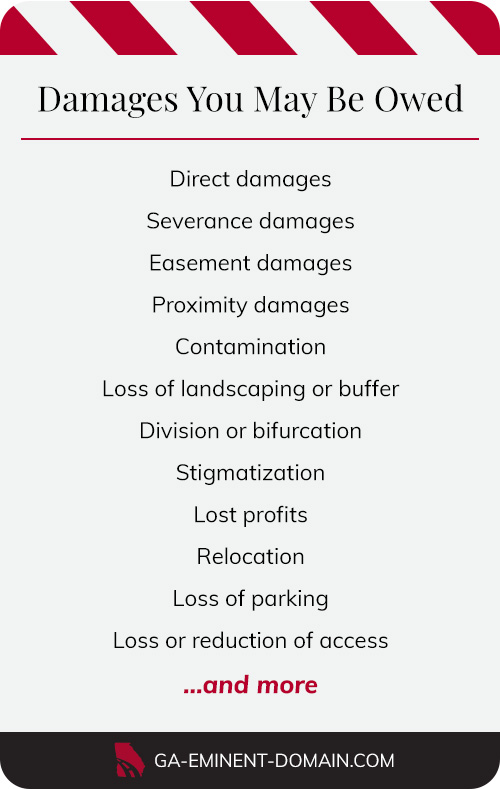
Depending on the circumstances of your eminent domain case, you may be entitled to compensation for several types of damages and losses, including:
- Direct damages
- Consequential or severance damages
- Easement-related damages
- Relocation expenses
- Business losses and lost profits
Understanding each type of compensation that may apply is important when determining the full impact of a taking on your property. We’ll start with direct damages – the compensation for any property or property rights actually.
Direct damages for the property taken
Direct damages is the money you can get for the land, building, or property rights physically being taken. For example, if GDOT takes your front yard so they can widen the nearby road, you are likely owed compensation for the land they’re taking. This money forms the core of “just and adequate compensation” that the government is required to pay you by law for a taking. This is where many property owners stop even though they may deserve much greater compensation.
Direct damages can involve:
- A portion of a parcel
- An entire parcel
- A permanent easement
- A temporary construction easement
- Access rights
- Other property interests
But direct damages are only part of the picture – the taking may also reduce the value and usefulness of the property you still own.
Consequential or severance damages to the remaining property
Consequential or severance damages generally refer to the ways a taking may negatively affect the property you still own after a talking. A partial taking can reduce the market value, usefulness, accessibility, or development potential of the land that remains.
Sometimes, taking a small portion of a property can result in serious damage to the value and usability of the property that’s left behind. The “severance” of a small portion has damaged the remainder. Experience is often required to properly spot and value this type of damage. Property owners should be aware that negotiations for severance damages can be difficult and technical.
Example: A gas station at an Interstate exit is subject to a taking that eliminates its tall signage, and a new one isn’t allowed. Even though the remaining land is still able to operate as a gas station, the value of the land for such purposes may be reduced due to the lack of a sign attracting drivers from the highway.
Loss or reduction of access
This broad damage type refers to the decrease in property value due to decreased or altered access to the property. How you enter and exit a property may make an enormous difference in its usability, safety, and value.
Example: A restaurant might suffer if the turning lane to their business has its elevation altered, making it inconvenient for customers and impossible for large trucks. If your business has to close because delivery trucks can no longer enter, the government may owe you significant compensation.
Loss of parking
When a business loses parking, it often becomes less attractive to customers simply for the lack of convenience. Also, certain zoning rules require a minimum number of parking spaces to operate a business on that parcel. If the taking by the government puts your business under that threshold requirement for parking spaces and your business is unable to obtain a waiver, you may be unable to continue to operate your business at that location. Not only will the business be affected, but the value of the land could be drastically reduced, as well.
Example: A busy barber shop with only ten parking spaces loses half of its parking to eminent domain. This may be compensable.
Increased proximity to a road or public project
Has the government moved something closer to your home that might impact your ability to use and enjoy your property the way you used to?
Example: Let’s say the government widens a road right by your home from two lanes to four. The closer proximity of the road to your home, along with impacts like more noise and light pollution, may entitle you to compensation.
Loss of landscaping, setbacks, or buffers
Buffers are not just aesthetics. Landscaping is vital to some properties, and losing a buffer may make a property nonconforming.
Example: GDOT takes a portion of your residential parcel, and in so doing, reduces the setback below the minimum required by the municipality. If you can’t obtain a variance to remain legal, GDOT may owe you compensation for a complete taking.
Division or bifurcation of the property
What if GDOT decides it needs the middle of your property? This kind of taking can trigger several complications and do tremendous damage to the remaining property and its value.
Example: A piece of a family farm is taken for a new Interstate connector, but the road crosses between the farmhouse & barn and the actual cultivated land – making it impossible to reach the other side of your property without going miles out of the way.
Contamination or physical damage
Land contaminated by government action makes your property worth less even when nothing is directly taken and may entitle you to compensation.
Example: GDOT takes a temporary construction easement to park its equipment on your land for a nearby road widening, but leaky equipment or materials contaminate and damage the land.
Stigma and perceived property risks
Some easements or changes can stigmatize a property, reducing its value. You may be owed compensation for this loss in value.
Example: The power company takes an easement on the property behind a home and installs large, high-tension power lines. Both the easement itself and the presence of high-tension lines can often drive off some buyers, so the property’s value is likely damaged beyond the physical easement itself.
Changes to zoning or legal conformity
A partial taking can change whether the property that remains complies with local zoning requirements. If the taking causes an existing use or property configuration to fall outside current zoning requirements, the remainder may become legally nonconforming.
Example: A commercial property is developed with multiple buildings under zoning rules that require a certain amount of land for the property’s existing density or intensity of use. When GDOT takes a portion of the parcel for a road project, the smaller remainder may no longer satisfy the zoning requirements that apply to the existing development which could restrict how the property can be redeveloped, expanded, or rebuilt in the future.
Damages caused by easements
Easements can be tricky. You may still own the property, but an easement gives another party certain rights to use or access a portion of it. Depending on the type and scope of the easement, those rights can limit what you can do with your property and reduce the value of the property that remains.
Easement-related damages can include:
- Restriction on future development: An easement may prevent you from building a home, commercial structure, parking area, or other improvement within the easement area.
- Loss of usable land: Although you may retain ownership, restrictions within the easement can make some of your land less useful for its current or intended purpose.
- Ongoing access by the easement holder: Utility companies, government agencies, or other easement holders may have the right to enter the property to inspect, maintain, repair, or replace infrastructure.
- Interference with farming or business operations: An easement may affect access, equipment movement, planting, parking, deliveries, storage, or other activities necessary to operate a farm or business.
- Reduced property value: Restrictions on how the property can be used or developed may make it less desirable to potential buyers and reduce its market value.
- Visual or perceived stigma: Utility infrastructure, transmission lines, pipelines, or other improvements associated with an easement may affect the property’s appearance or how prospective buyers perceive it, potentially affecting value.
- Temporary construction impacts: Installing or improving infrastructure within an easement may temporarily interfere with access or use of the property and can involve excavation, construction equipment, noise, or other disruptions.
Example: A utility company obtains an easement across a commercial property to install power, data, or sewer lines and retains the right to access the easement area when needed. The owner still owns the land, but the easement may restrict where the owner can build, landscape, or make other improvements. Depending on how the easement affects the use and value of the property, the owner may be entitled to compensation.
With easements, your property isn’t being taken, but your right to use it as you please is. Determining the value of your rights can be difficult, but your attorney can help.
Relocation expenses
When an eminent domain taking forces you to move from your home or relocate a business, the financial impact can extend beyond the value of the property being acquired. Depending on the circumstances, you may also be eligible for relocation compensation to help with certain expenses caused by the move.
Relocation compensation may cover costs associated with moving a residence, business, equipment, inventory, or other personal property. For a business, eligible expenses may include the cost of moving machinery, furniture, supplies, or other property to a new location, as well as certain expenses associated with finding a suitable replacement property. Residential property owners and tenants may also qualify for assistance with eligible moving and relocation costs.
Example: If a restaurant must relocate because its property is acquired for a road project, relocation benefits may help cover eligible costs associated with moving kitchen equipment, furniture, inventory, signage, and other business property to a new location. Depending on the circumstances, additional relocation expenses may also qualify for compensation.
Relocation benefits are separate from the compensation you may be owed for the property taken and damages to any property that remains. Eligibility and the amount available can depend on the type of property, the nature of the move, and the expenses involved.
Business losses and lost profits
When property used for a business is taken or affected by an eminent domain project, the financial impact may extend beyond the value of the land itself. A partial or complete taking can change how a business operates, how customers reach it, and whether it can continue operating successfully at the same location.
A taking may affect a business by:
- Limiting customer access: Changes to entrances, exits, traffic patterns, or road access may make it more difficult for customers to reach the business.
- Reducing visibility or signage: A taking or road project may make the business harder to see from the road or affect the location, size, or effectiveness of its signs.
- Reducing parking: The loss of parking spaces can affect customer capacity, employee parking, or the property’s compliance with local parking requirements.
- Disrupting drive-through lanes: For restaurants, banks, pharmacies, and other businesses that rely on drive-through service, a taking may interfere with circulation or eliminate a drive-through lane altogether.
- Restricting delivery access: Changes to loading areas, entrances, or vehicle circulation may make it harder for trucks and vendors to reach the property.
- Changing the operational layout: A taking may affect outdoor storage, loading areas, equipment placement, traffic flow, or other parts of the property necessary for day-to-day operations.
- Causing temporary closures or disruptions: Construction or temporary easements may interfere with access or operations for a period of time.
- Affecting the ability to remain at the location: In some cases, the property that remains may no longer be suitable for the business’s needs, potentially requiring relocation or affecting the business’s ability to continue operating there.
Example: A quick-service restaurant suffers the loss of just a few feet on one side of its parcel – but those few feet were its drive-thru lane. Without it, the restaurant’s business suffers, and the parcel’s value may plummet.
These impacts can affect a business’s revenue, profitability, and overall value. However, not every business loss or decline in revenue caused by an eminent domain project is automatically compensable. Business losses or lost profits may be compensable depending on the specific facts and applicable Georgia law.
How are eminent domain damages evaluated?
Identifying how a taking affects your property is only part of the process. The next step is determining what those impacts may be worth. Depending on the property and the nature of the taking, attorneys and qualified experts may use several types of evidence to evaluate and establish damages.
Evidence used to evaluate damages may include:
- Property appraisals: A qualified eminent domain appraiser can evaluate the value of the property being acquired as well as how the taking may affect the value of what remains.
- Before-and-after valuations: Comparing the property’s value before the taking with the value of the remaining property after the project can help identify losses that may not be reflected in the value of the land actually taken.
- Engineering or access studies: Engineers may analyze how changes to entrances, exits, road configuration, drainage, grading, or other physical conditions affect the property’s access and usability.
- Land-planning analysis: Land planners can evaluate how a taking affects the property’s layout, development potential, highest and best use, or ability to accommodate future improvements.
- Environmental testing: Testing and environmental analysis may help identify contamination or other environmental conditions relevant to the property and its value.
- Traffic or visibility analysis: Traffic data and other studies can help evaluate changes in traffic flow, access, circulation, or visibility that may affect a commercial property.
- Business financial records: Tax returns, profit-and-loss statements, sales records, and other financial documents may help establish the financial impact of a taking when business losses are legally relevant.
- Zoning and development restrictions: Zoning ordinances, site plans, permits, setback requirements, and other land-use regulations can help show whether a taking limits how the remaining property can be used, improved, expanded, or redeveloped.
The evidence needed will depend on the property and the specific impacts of the taking. Looking at the property from multiple angles can help uncover damages that might not be apparent from the government’s initial valuation alone.
Depending on the issues involved, evaluating damages may require input from appraisers, engineers, land planners, zoning experts, traffic engineers, business valuation professionals, and other specialists. Learn more about how our network of land experts can help evaluate the full impact of a taking on your property.
Why the government’s initial offer may miss certain damages
Beware! It’s unlikely the government’s initial offer accounts for all of the damages that may be appropriate in your case. And while the government’s offer is almost certainly low, the stakes for you are sky high: this is likely your only opportunity to get all the compensation you may deserve.

It is highly recommended to seek all possible compensation before you sign any agreement, as it is likely your only chance to negotiate for more. Consult with a skilled, experienced eminent domain attorney for help.
Frequently Asked Questions About Eminent Domain Damages in Georgia
What is the difference between direct and consequential damages in Georgia?
Direct damages compensate you for the property or property rights the government actually takes, such as land or a permanent easement. Consequential damages, sometimes called severance damages, compensate you for any reduction in the value of the property you still own because of the taking.
Can I receive compensation if only part of my Georgia property is taken?
Yes. If the government takes only part of your property, you may be entitled to compensation for the portion taken and for certain damages to the property that remains. The potential compensation available depends on the specific facts of the taking and its impact on your property.
Can I recover eminent domain damages in Georgia if no land is permanently taken?
Potentially. You may be entitled to compensation even when the government does not permanently acquire part of your land. Whether compensation is available, and what damages may be recoverable, depends on the specific impact on your property and applicable Georgia law.
Can I be compensated for reduced access or lost parking in Georgia?
If an eminent domain taking reduces access to your property or eliminates parking, you may be entitled to compensation if those changes reduce the value of the property that remains. Whether these impacts are compensable depends on the specific facts and applicable Georgia law.
Are business losses compensable in Georgia eminent domain cases?
In some Georgia eminent domain cases, business losses may be compensable when a taking affects the operation or value of an established business. Factors such as reduced access, lost parking, changes in visibility, or an inability to continue operating at the same location may be relevant. However, not every decline in revenue or business loss is automatically compensable.
How are damages to the remaining property calculated in Georgia?
Damages to the remaining property are generally evaluated by comparing its value before the taking with its value after the taking and project impacts. Appraisals and other expert analyses may be used to identify and support these consequential or severance damages.
Georgia business owners: Seeking just compensation for eminent domain damages
Even if you’re an experienced negotiator as a business owner, you should seek the help of an eminent domain attorney. Eminent domain is likely different from any property issue you’ve ever encountered.
For example, you’re not entitled to compensation for buildings on the land, just the land itself, and asking for building compensation can harm your case. Get a free case evaluation from a dedicated condemnation attorney before you agree to anything.
Free case evaluation – Experienced Georgia eminent domain attorney
You deserve just compensation for many harms and losses you’re being subjected to by an eminent domain taking, and we know how to help you.
Since we’ve been in business, we’ve helped our clients increase their initial offers on average by nearly 3x more!1
We can draw on our network of professionals as needed to build your case for maximum compensation, such as appraisers, engineers, environmental scientists, land planners, and more. We advance all these costs while you pay nothing upfront – and nothing at all if we don’t increase the government’s offer.2
If you’re facing eminent domain, don’t take on the government alone. Call today at 1-888-871-1790 or contact us online for a free case evaluation.

You May Also Be Interested In
Can You Get Relocation Compensation?